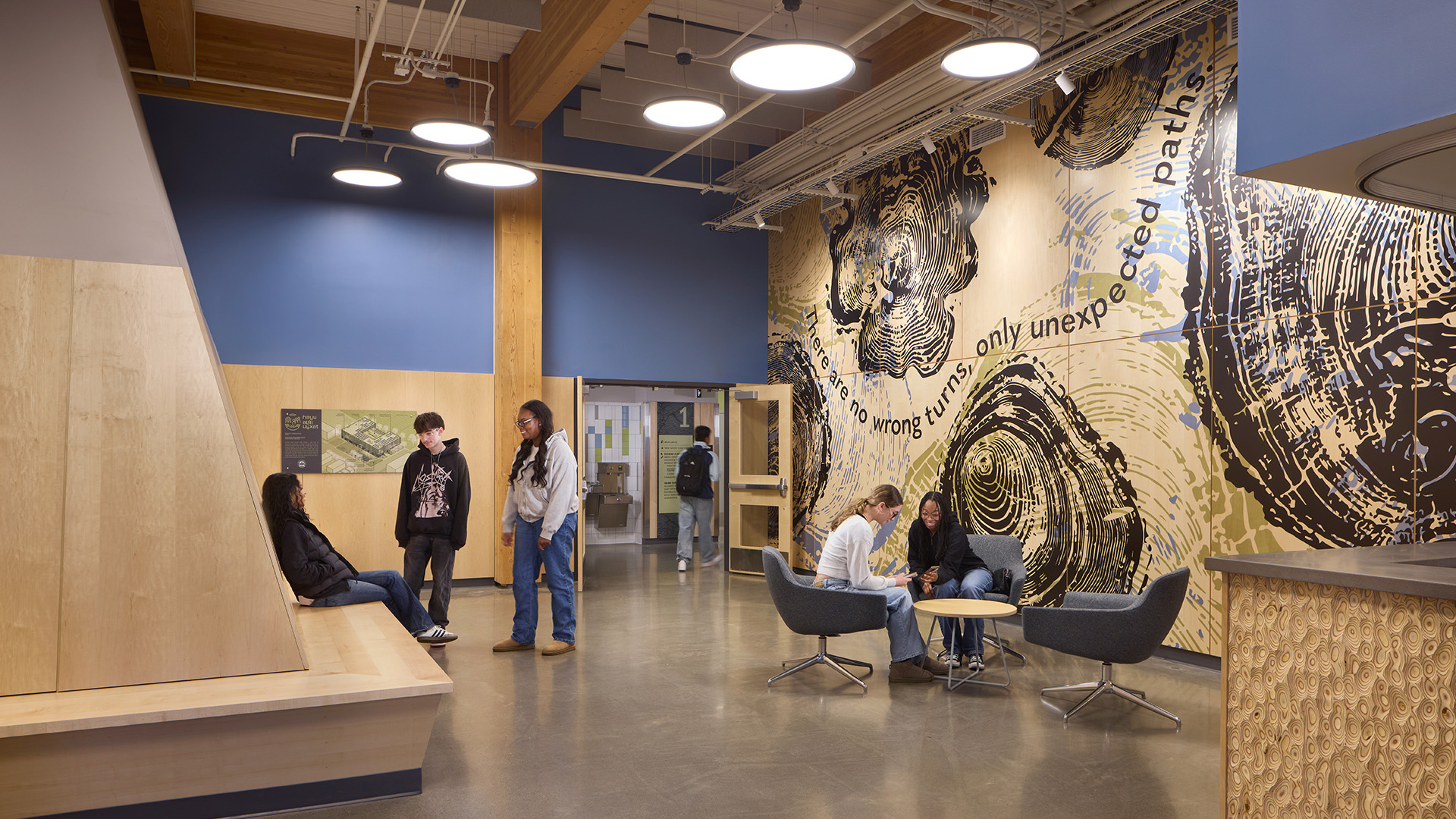
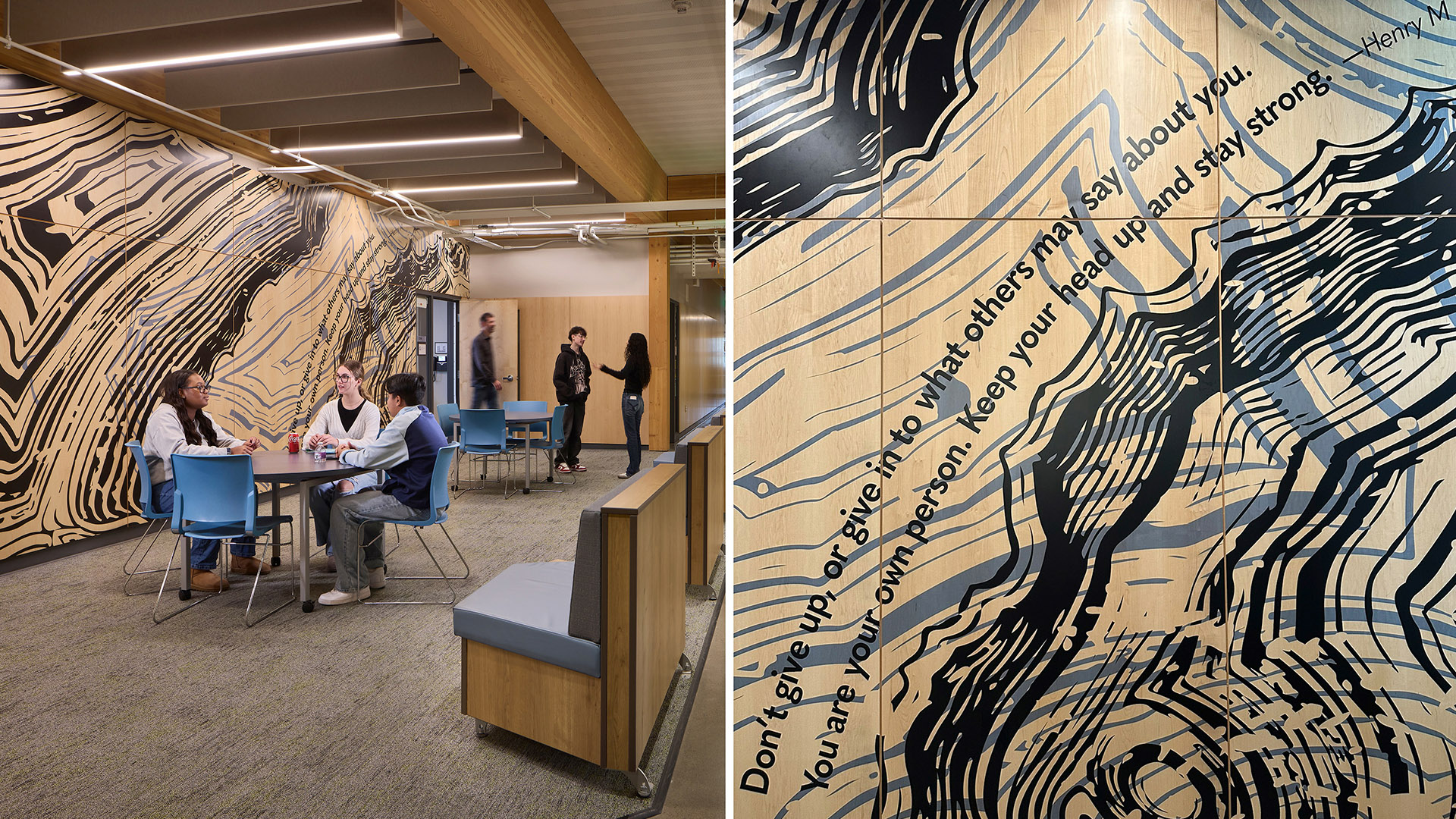
The hayu alqi uyxat project, named after the Chinook phrase meaning “Many Future Paths,” is a transformative 85,000-square-foot educational facility designed to serve students who thrive in alternative learning environments. The completed learning environment becomes a space for students who’ve never truly had a school to call their own. It’s a place that honors each child’s unique learning journey, offering what traditional schools often overlook—an environment that recognizes them, supports their individual needs, and is committed to providing equitable opportunities for success. Every student is met where they are, with immersive experiences designed to nurture the whole child and help them thrive. The experiential graphics that enhance the space are integral to fostering this sense of safety, agency, and aspiration for a brighter future full of possibility.
With multiple alternative assistance and educational programs housed in different buildings throughout the school district, many in suboptimal spaces, the District faced the challenge of consolidating these programs into a single, purpose-built space. The goal: to provide a broad range of therapy and support services for students who struggle in traditional high school settings. Ensuring this new facility’s success required a highly collaborative approach involving extensive stakeholder engagement from students, staff, and the wider community, including input from local indigenous people on the facility’s name: hayu alqi uyxat (‘many future paths’ in Chinook.) This collaborative process was essential for creating a space that met the unique needs of its users and reflected their voices in the final design.
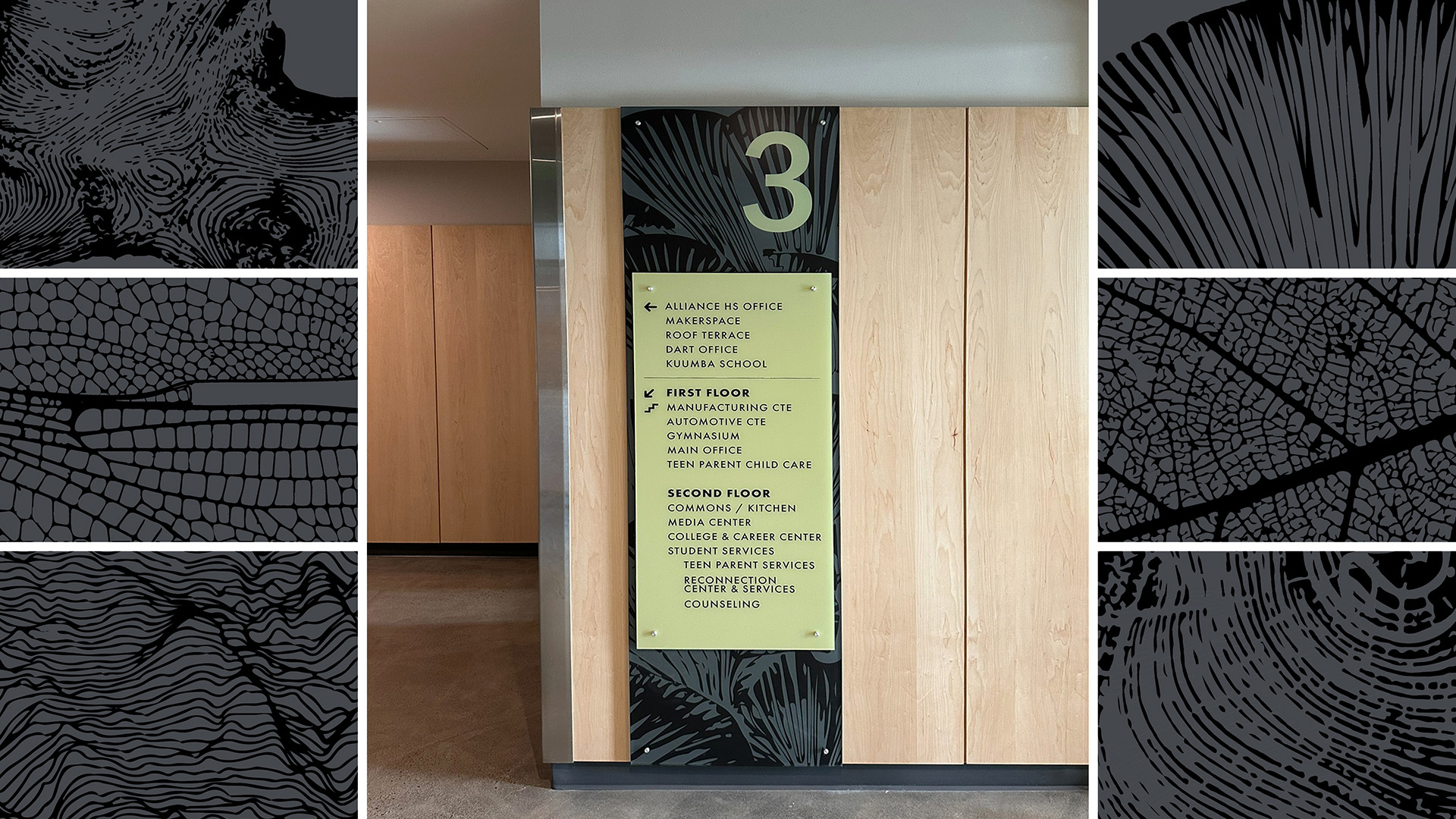
The design team conducted a series of stakeholder workshops to gain input from students and staff. Based on this input, social-emotional wellbeing, expressed through the precepts of Trauma Informed Design (TID), surfaced as an integral design principle, leading to envisioning the site as a forest and the building, constructed of mass timber, as a large treehouse. This overarching theme connecting the building with nature and the environment was expressed on the interior and exterior, becoming the primary driver for the building’s biophilic experiential graphic design system.
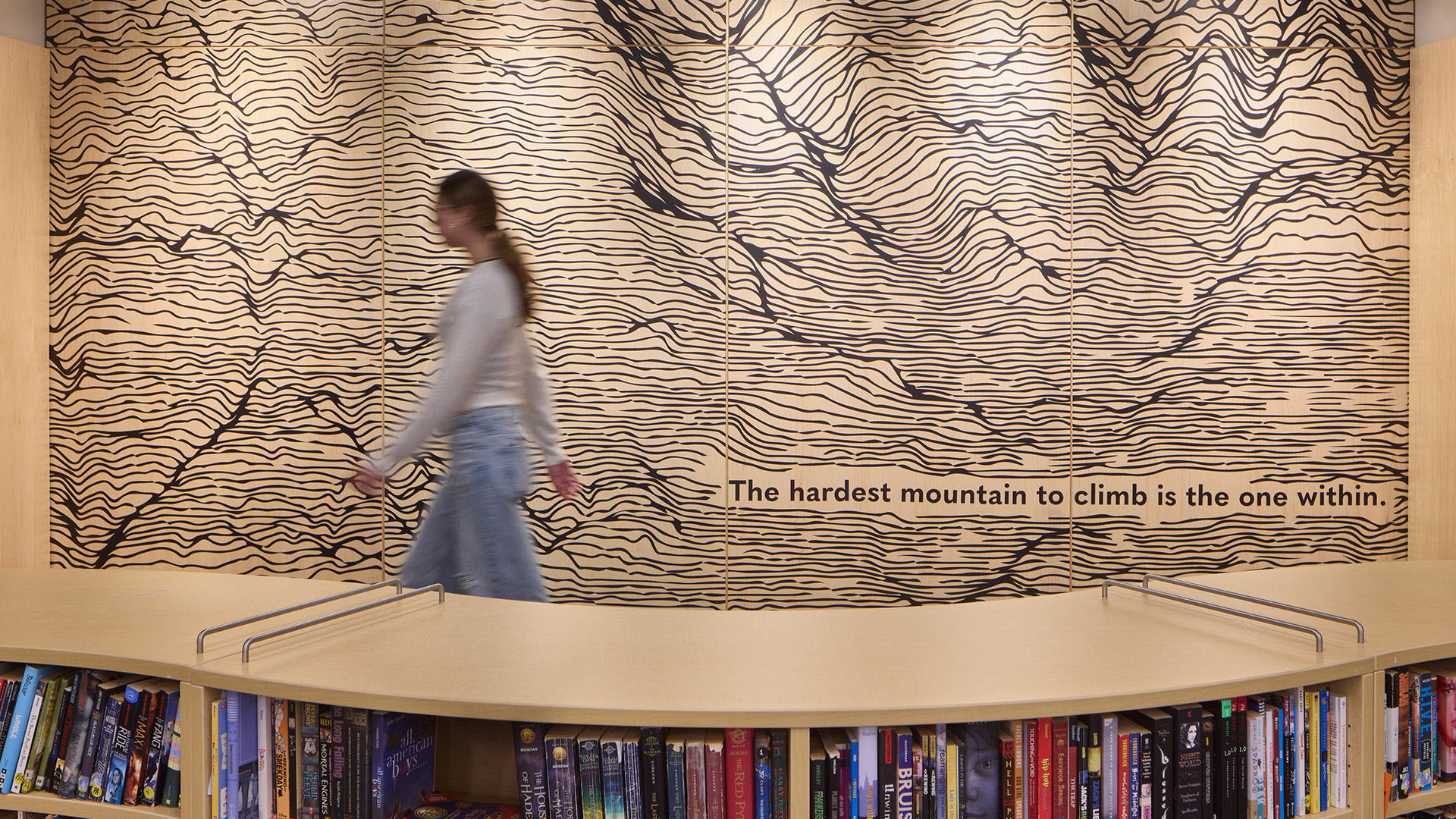
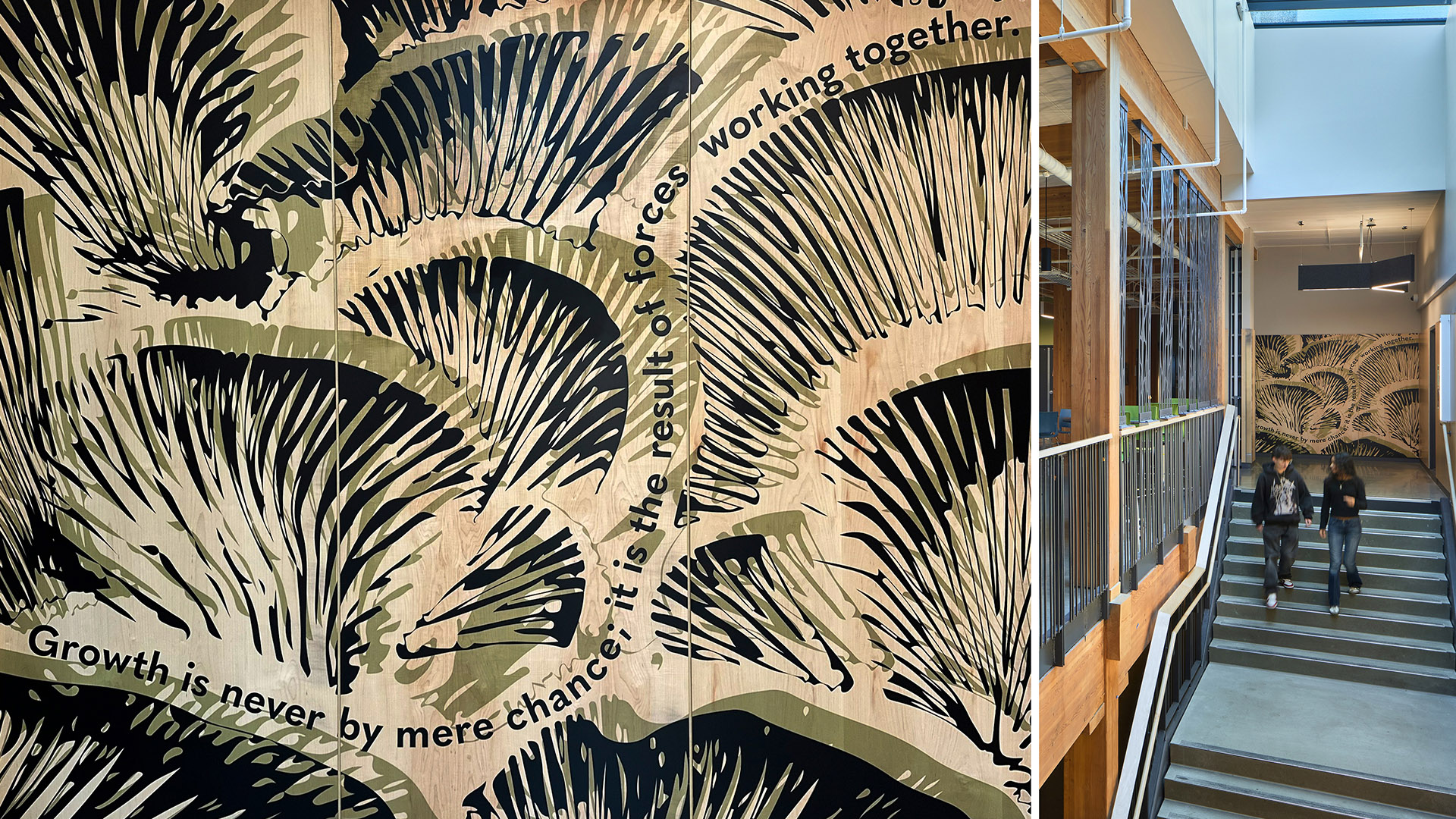
Like the rings of a tree, the project’s design tells a multilayered story, each layer building upon the previous layer to deepen its meaning. The first layer, grounded in biophilic principles, utilizes natural textures and patterns that highlight the relationship between the space and its environment. The second layer celebrates each student’s individuality, with every line symbolizing a distinct voice and expression, converging to form a cohesive and harmonious whole. The third layer brings student voices to the forefront, embedding their words into the design, granting them ownership and a sense of belonging within the space.
Students have responded with deep gratitude for the opportunity to contribute to the project. For many, it was not just about participating but also about having their voices immortalized in the space itself. During a presentation, one student reflected: “Most people don’t care what I have to say, and now I get quoted on a wall.” This statement perfectly encapsulates the project’s essence: the transformative act of being seen, heard, and represented.
The design process has garnered praise for its inclusivity and collaborative spirit. Stakeholders have noted that the approach went beyond industry norms, demonstrating a true dedication to understanding and meeting the needs of the community. As one student shared during a design review: “This is the first time I’ve ever seen my voice matter.” The design team’s patient and deliberate approach ensured that engagement was not only meaningful but also authentic, even when it required additional time and effort.
I have so much respect and appreciation for how you work with the team. I assumed what you do was industry standard, but it became clear that your team goes above and beyond—really hearing what people want and committed to getting it right, even when it takes longer. It was a truly inclusive process, and I loved working with you all.
–Allison Adams, VP Modernization, Portland Public Schools
Hayu alqi uyxat’s timber construction and numerous biophilic elements inspired by forest ecosystems were designed to evoke a sense of immersion in nature. The generous use of various natural patterns digitally printed onto maple wall paneling enhances the building’s wooden structure, fostering an environment where occupants feel a sense of calm, stability, and safety. Incorporating student quotes within the graphics reminds them of their agency and contributions, instilling a sense of pride in an environment they helped bring to life. This project is a multifaceted initiative that honors the students’ voices, reflects the power of collaboration, and connects occupants deeply to the natural world.