This was one of the questions considered by the experiential graphics team as it developed designs for the renovation and new cross-laminated timber addition of Seattle’s historic Van Asselt School, a city landmark dating to 1909. Currently, Van Asselt serves as a swing-site for schools displaced by construction, which means the building’s demographics change regularly. The experiential graphics team considered the universalities of the human condition and applied those insights to themes and designs that speak to our common emotions and experiences.
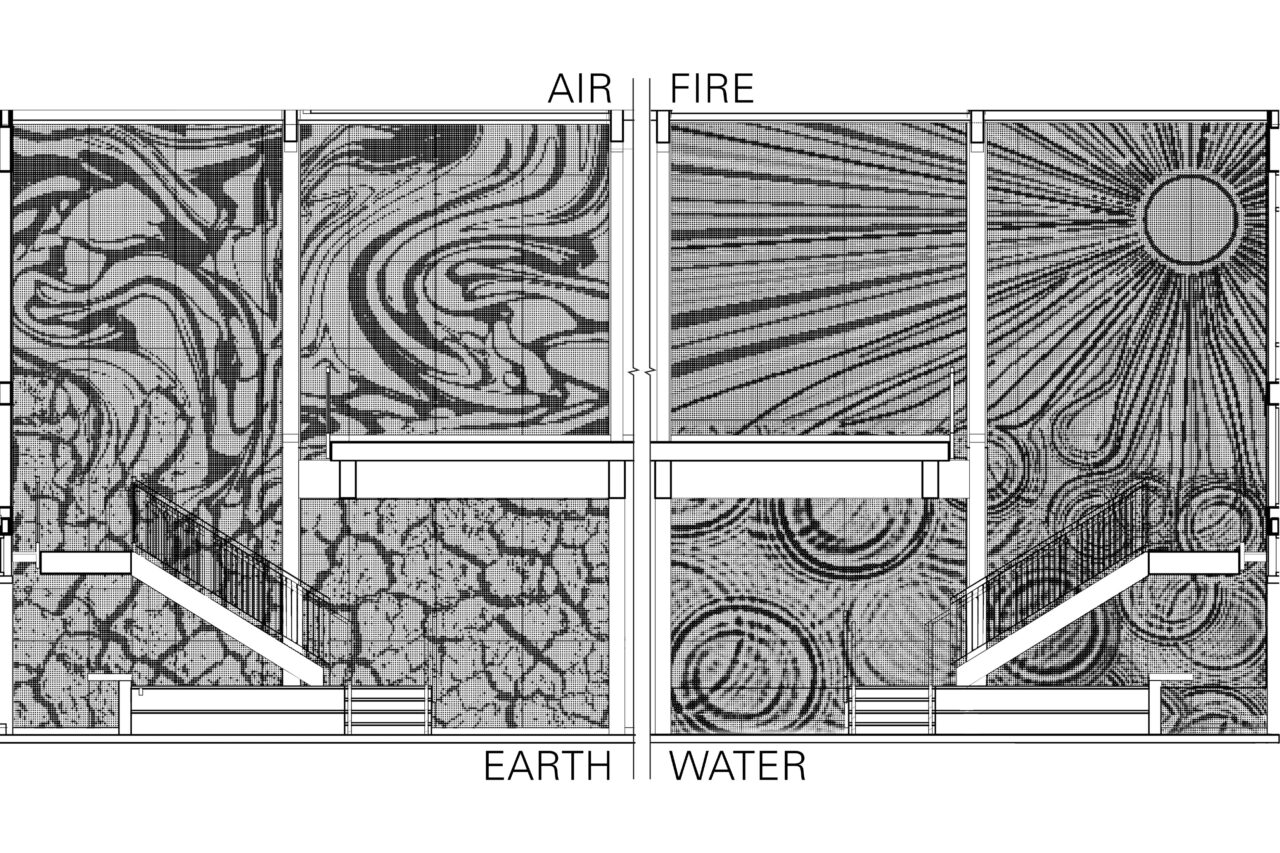
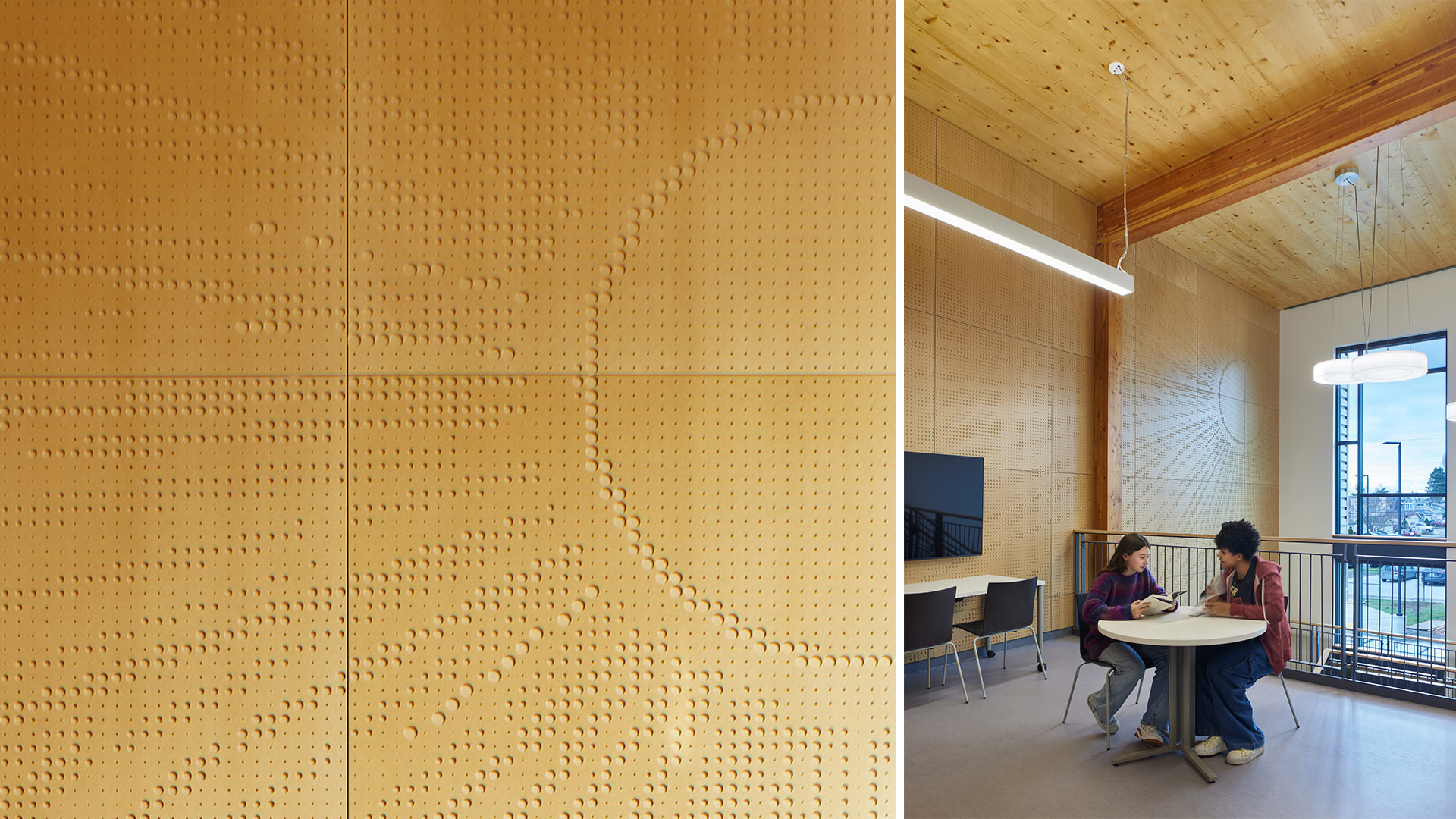
The school’s new addition houses four learning communities, each represented with a unique visual identity. The design team drew from the four elements—water, earth, wind, and fire—as commonalities shared by students from diverse backgrounds, experiences, and perspectives. Abstracted textures and patterns etched into MDF panels enliven the spaces: ripples represent water, cracked soil represents earth, fog wisps represent air, and sun rays represent fire.
The experiential graphics add a whole new dimension to the building by bringing the universal themes of elements into the new addition. At the east end of the building, the sun graphic integrated into the MDF panels is highly legible, easily recognizable, and reinforces the natural light entering the building through the large storefront windows adjacent to the graphics.
–Ethan Bernau, Partner and Sr. Project Manager, SOJ
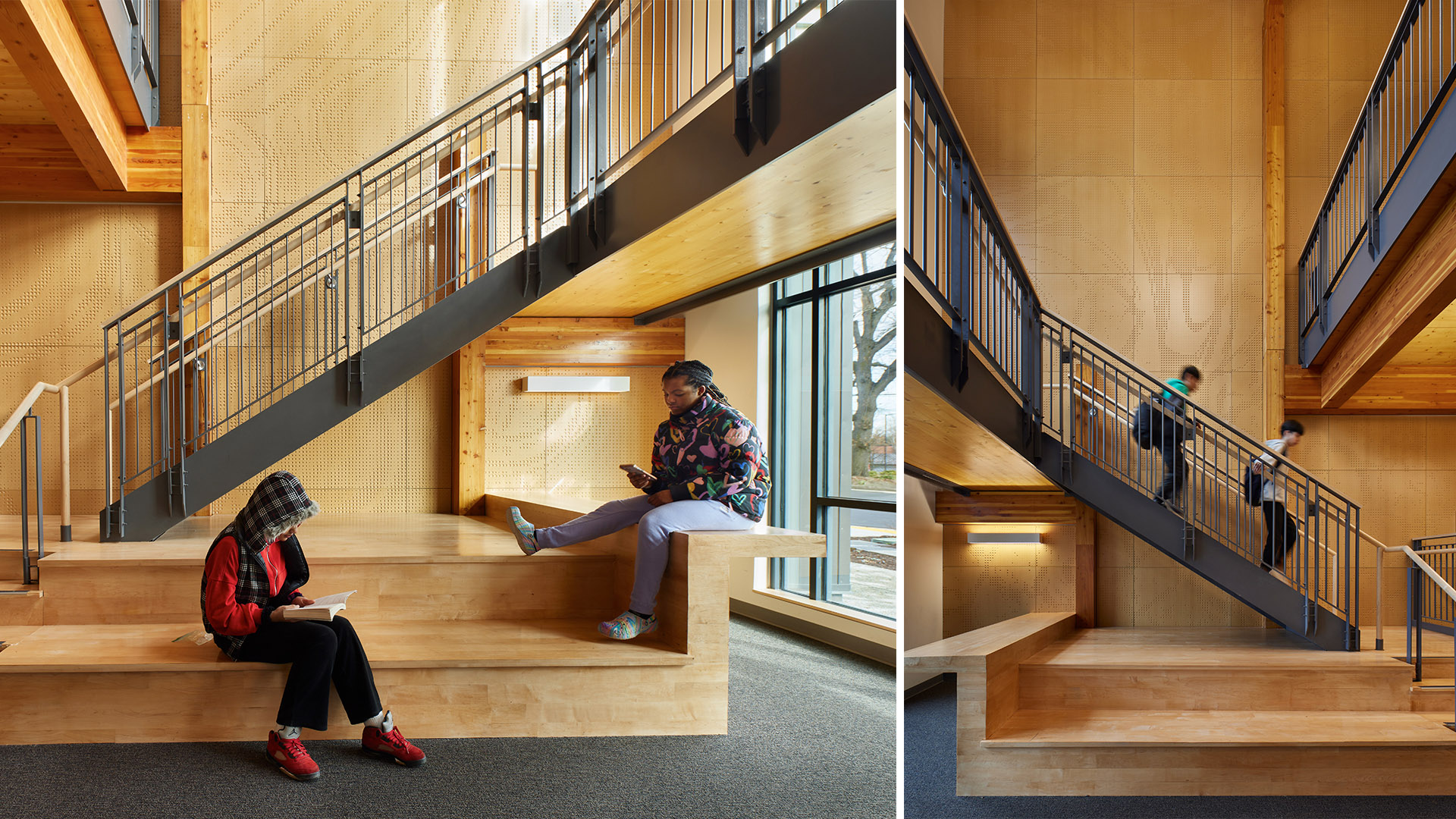
Giving a recognizable visual theme to each learning community helps the students find their way and take ownership of their spaces. The textured warm tones complement the tall ceilings, framed by the building’s mass timber structure.
Additionally, the school incorporates three interpretive displays in collaboration with the Washington Department of Archaeology and Historic Preservation (DAHP). The graphics team conceived each display to highlight the local impact of the original early 1900’s schoolhouse, the neighborhood’s history, and the site itself.
Bassetti’s team did an excellent job coming up with several thoughtful and well-conceived options that could meet the State’s requirements for historical information. Bassetti’s presentation of options included clear imagery and accurate cost estimates, which made the decision-making process easy for the owner.
–Ethan Bernau, Partner and Sr. Project Manager, SOJ
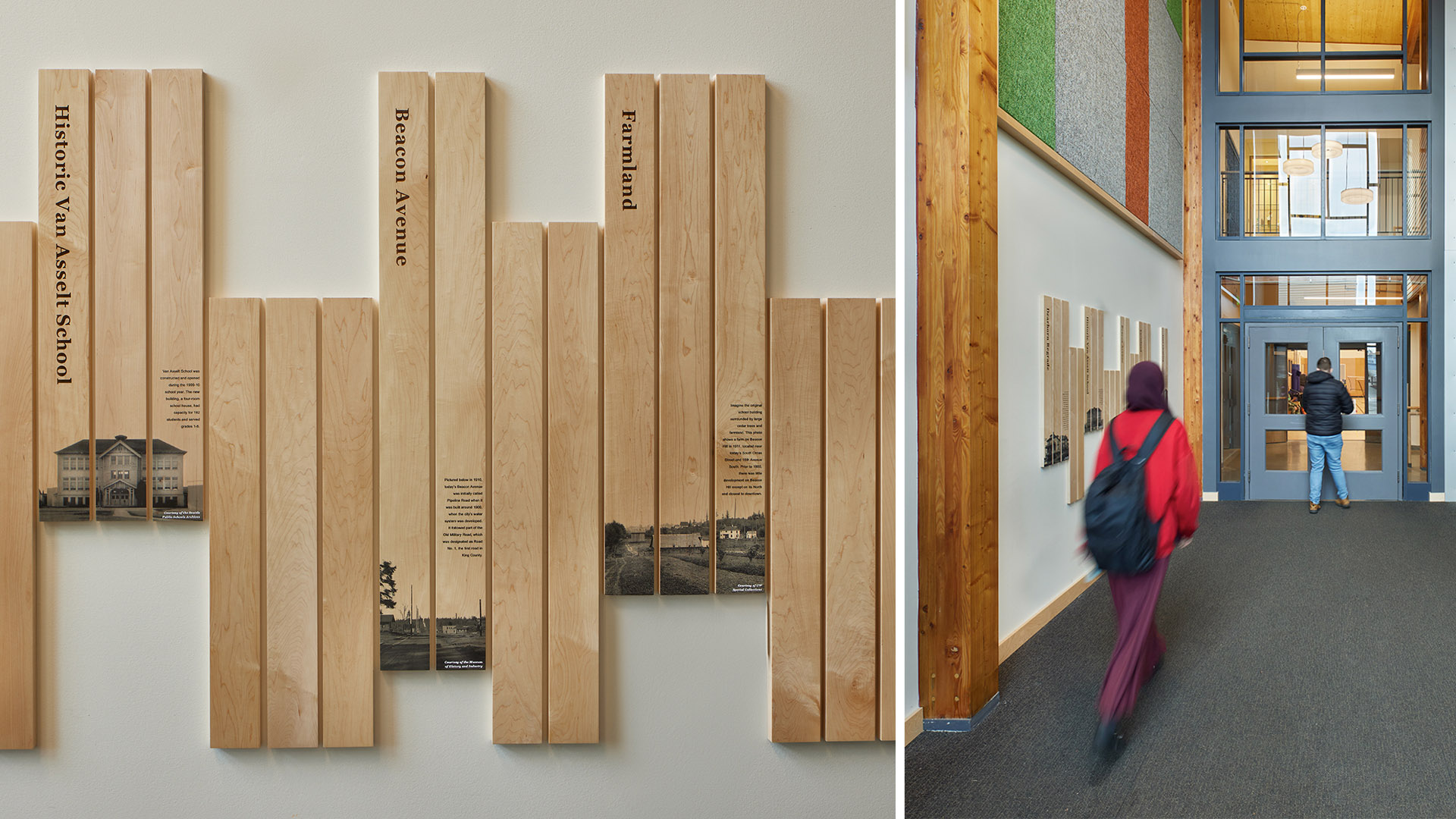
The first interpretive display, a wood installation at the main entrance, engages and educates visitors about the school’s storied past, the site, and the surrounding neighborhood. Staggered vertical wood boards accentuate the verticality of the new natural light-filled entry vestibule. Archival photographs and stories are paired with text etched into the wood boards. This material, intentionally selected for the display, subtly relays the story of wood construction on site – the 1909 building, a wood-framed structure – and the new mass timber addition.
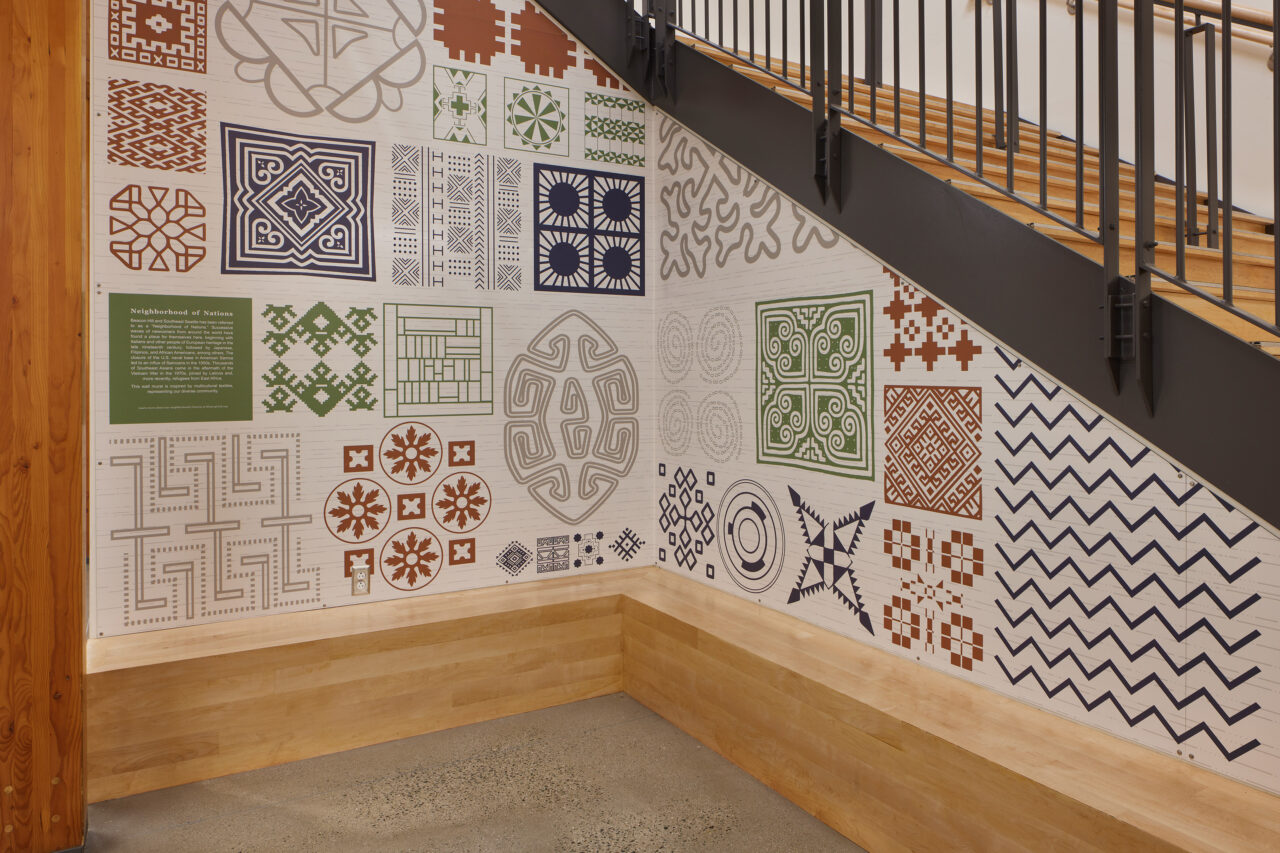
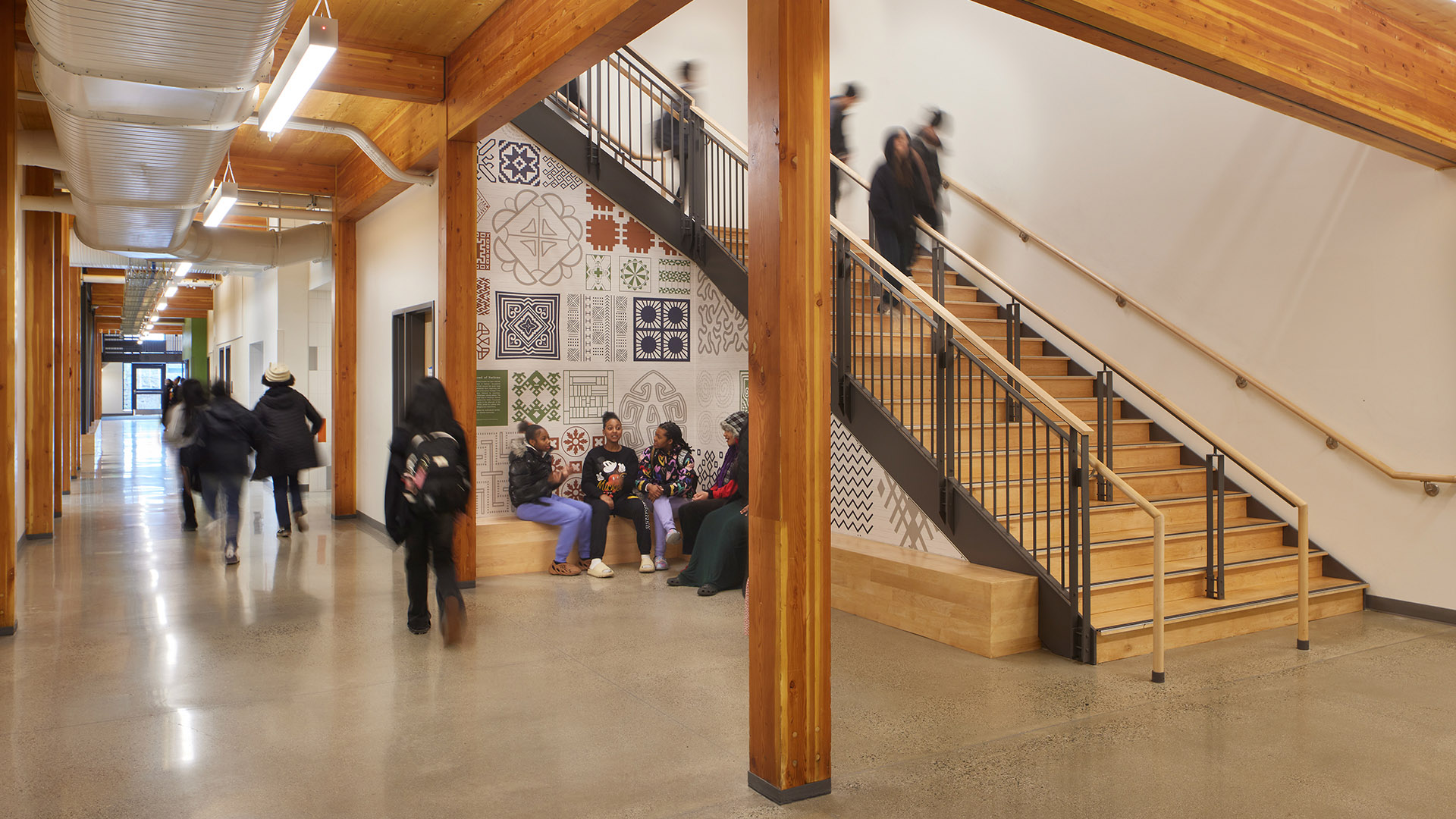
The second display draws inspiration from Beacon Hill’s nickname, “The Neighborhood of Nations,” for its mural of multicultural textiles at the central staircase, considered the heart of the school. It resembles a patchwork quilt, symbolizing the cultural and racial diversity of Beacon Hill and South Seattle. An accompanying informational panel educates visitors about the school’s history and the neighborhood’s diversity, inspiring a connection to place.
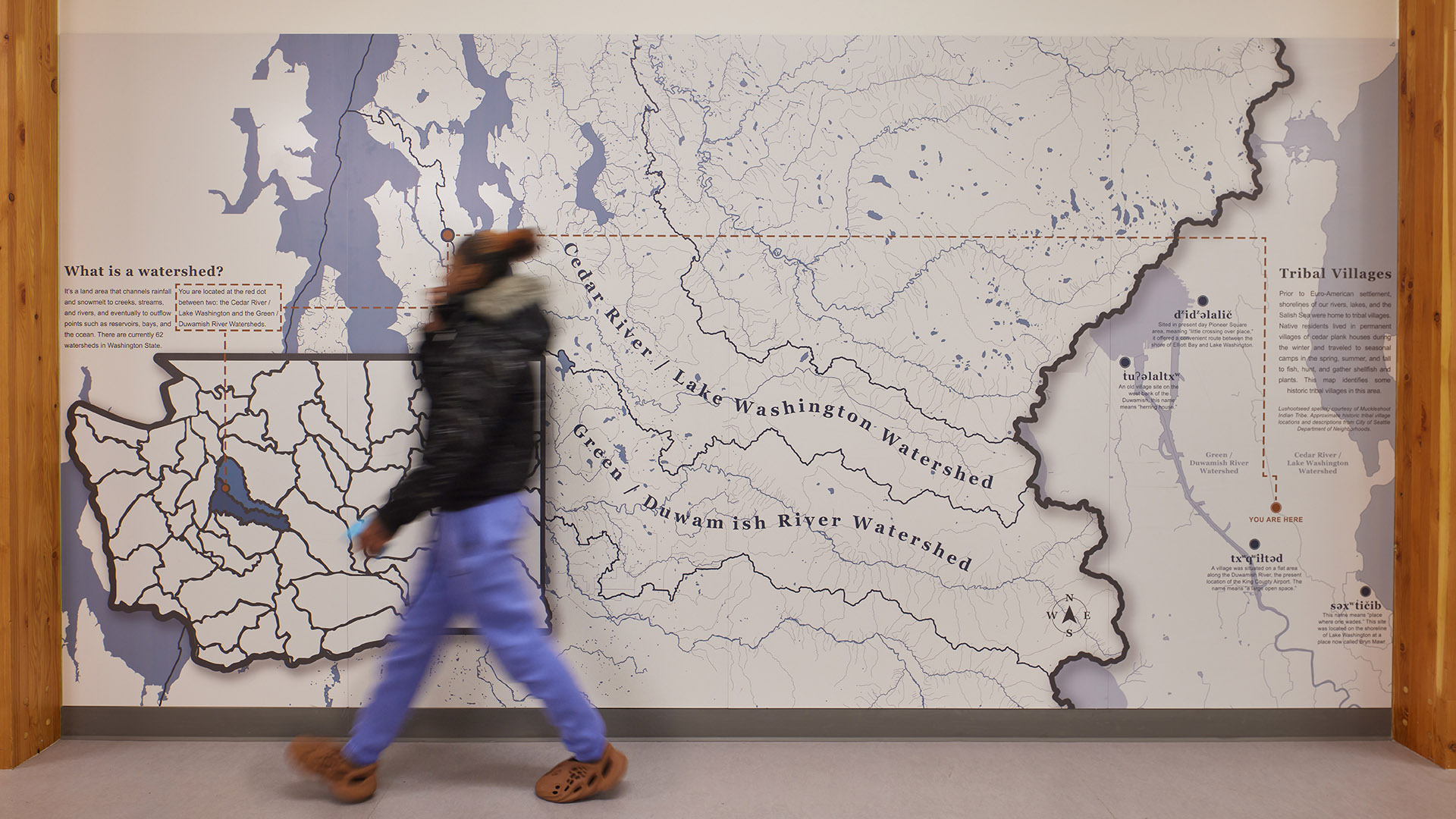
The third display explores Van Asselt’s unique geographic location and topography, on a ridge between two drainage basins, through a large-scale mural featuring a map of regional watersheds. This interpretive display explains how rainfall travels to the ocean and narrates the story of hydrology from both environmental and historical perspectives. Along the shorelines of nearby rivers and lakes, the display highlights historic tribal village sites and their cultural significance.
The experiential graphics at Van Asselt School demonstrate how design centered on universal themes can create a sense of belonging in a space that serves changing communities. By pairing the four elemental identities with interpretive displays that highlight the site’s history and cultural diversity, the team shaped an environment that is clear, welcoming, and meaningful. The result is a school that helps students orient themselves, connect to place, and experience the building as more than a backdrop—one that reflects both its past and the people who learn within it.