Ambitious capital project initiatives don’t just happen; they require thoughtful planning and the support of a committed donor community. By cultivating strong relationships and inspiring generosity, organizations can turn bold ideas into lasting legacies that shape the future. A robust donor recognition program can elevate a project and enable a design vision to fully come to life.
Donor Engagement is Often Reactive
Organizations embarking on capital projects often face a critical challenge: thoughtfully integrating donor recognition into the design in a way that enhances fundraising outcomes. Too often, donor engagement is reactive—recognition strategies are developed late, resulting in missed opportunities and rushed decisions that compromise both design and donor experience. In many cases, donor recognition is treated as an afterthought. Smaller organizations may lack dedicated development staff, and even larger institutions can find themselves scrambling to tailor spaces or visuals to donor interests late in the process. This approach leads to generic solutions, last-minute redesigns, and limited flexibility for future fundraising, all of which diminish the impact of donor contributions.
A Better Solution in Action
Successful donor engagement starts early. By identifying donor-aligned scopes of work during conceptual and schematic design—such as entryways, sustainable features, gardens, galleries, or AV systems—organizations can create compelling packages that inspire giving. Architects can help visualize these opportunities through renderings and flexible design strategies that accommodate donor-funded enhancements without disrupting the overall project. This proactive mindset transforms fundraising into a strategic design tool.
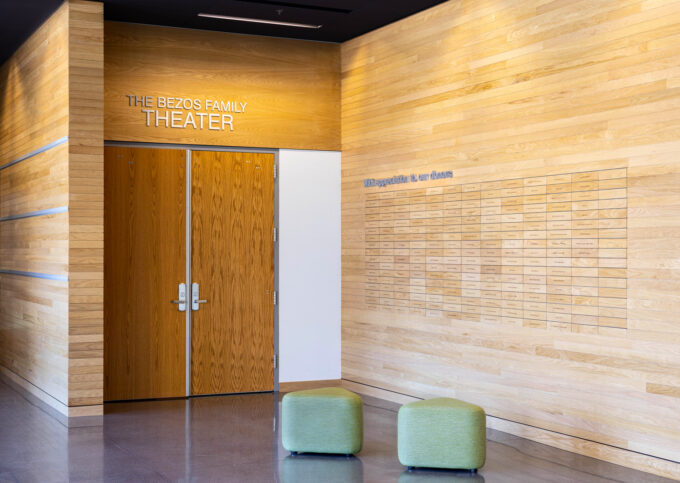
We recently completed a performing arts theater in which we anticipated donor interest in AV upgrades and built-in infrastructure early, allowing a donor to fund enhancements without costly redesign. In recognition of their donation, we created a custom wood wall featuring removable panels inscribed with donor names; this elegant, expandable design seamlessly complements the building’s aesthetic. Typography and signage were unified across the facility, reinforcing a thoughtful, non-intrusive recognition strategy. Involving the organization’s development lead in the design process was key to aligning fundraising goals with architectural opportunities.
When Barriers Block Momentum
Identifying donor-aligned scopes of work early can come with its challenges. Owners may hesitate to give donors influence over design decisions. Smaller organizations may not have a fundraising lead to guide strategy or do not view architecture as a fundraising tool. However, without a thoughtful design, recognition can feel cluttered or commercial, leaving donors without a proper recognition. These challenges can be addressed through early planning, clear design guidelines, and strategic donor engagement.
The Best First Steps
A thoughtful approach and strategy begins during conceptual design. Identify donor-aligned scopes and develop flexible, visually compelling packages as the program and space design develops. This allows for a cohesive recognition solution that fits seamlessly into the design, or becomes a statement focal point, and makes donors proud. If your organization doesn’t have a development manager, your architect can help lead this effort. Architects and designers have a wealth of past experience to suggest and develop donor-friendly design strategies. Don’t forget to think beyond recognition—consider how your program and design can be shaped to attract mission-aligned donors.
Whether public or private, every project has the potential to inspire giving through thoughtful, integrated design.
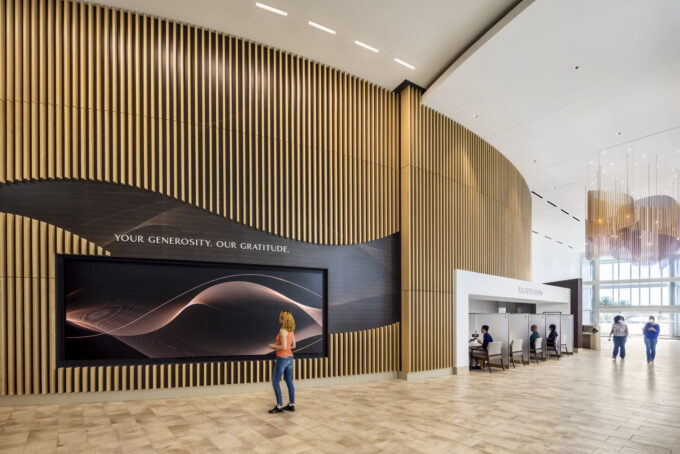
Photo: Lawrence Anderson Photography